
Rules of Engagement Collapse
Black Hawk DownThis flow follows the strain placed on rules for distinguishing armed attackers from civilians.
increasing Bearing strength in each event
 decreasing
Bearing strength in each eventdecreasingA Restrained Standard
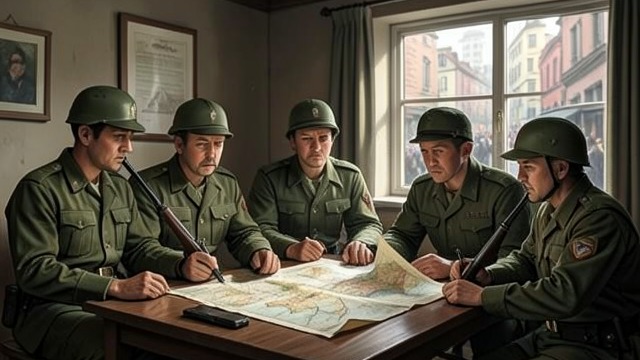
Identifying a Threat
Limited Permission to Fire
Rangers were instructed to shoot only when someone pointed a weapon at them. The rule attempted to preserve a distinction between combatants and civilians in a crowded city.
A Difficult Environment
Women, children, and armed men moved through the same streets. The crowded surroundings made clear identification increasingly difficult once firing began.
Fire amid the Crowd
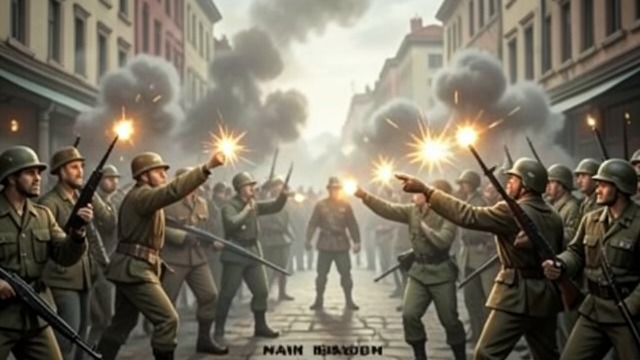
Threat and Uncertainty
Visible Weapons
Soldiers encountered gunmen among residents and sometimes saw people pointing out their positions. Flash-bang grenades, warning fire, and direct fire became part of attempts to manage the crowds.
Consequences of Ambiguity
The danger was real, but the presence of civilians meant that every decision carried risk. The battle exposed how difficult it was to apply a clean rule in a neighborhood where armed resistance and ordinary life overlapped.
Restraint Gives Way
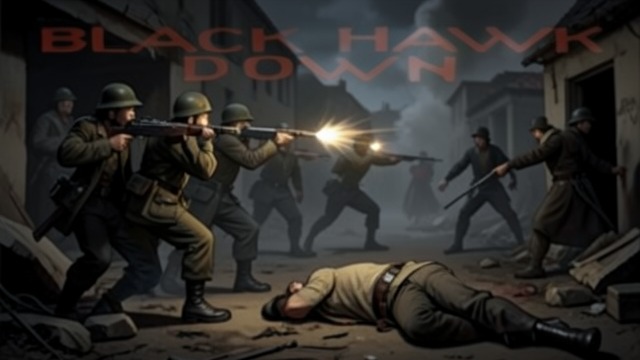
A Changing Threshold
The Convoy Under Attack
As the vehicles came under repeated fire, some soldiers described shooting at whatever moved. Exhaustion, casualties, and fear eroded the earlier effort to discriminate.
Moral Cost
The change did not resolve the danger; it deepened the conflict between survival and civilian protection. The narrative leaves the choices disturbing rather than presenting them as simple victories.
Before the first firefights
October 3, 1993, afternoon
October 3, 1993, evening
